How to use an AI companion as a thinking partner
An AI companion can be a thinking partner that helps you untangle decisions, test ideas, and see your own reasoning more clearly. Here is how to get the most from it.
9 posts in AI Companions.
An AI companion can be a thinking partner that helps you untangle decisions, test ideas, and see your own reasoning more clearly. Here is how to get the most from it.
An AI companion should add to your life, not take it over. Practical boundaries for time, privacy, emotional reliance, and keeping people at the center.
Memory is what separates a companion from a chatbot. Here is how five AI companion apps handle memory in 2026, and what to compare before you choose.
Love Character.AI but want a companion built around remembering you? Here is what people enjoy about Character.AI, why memory keeps coming up, and how Lumina differs.
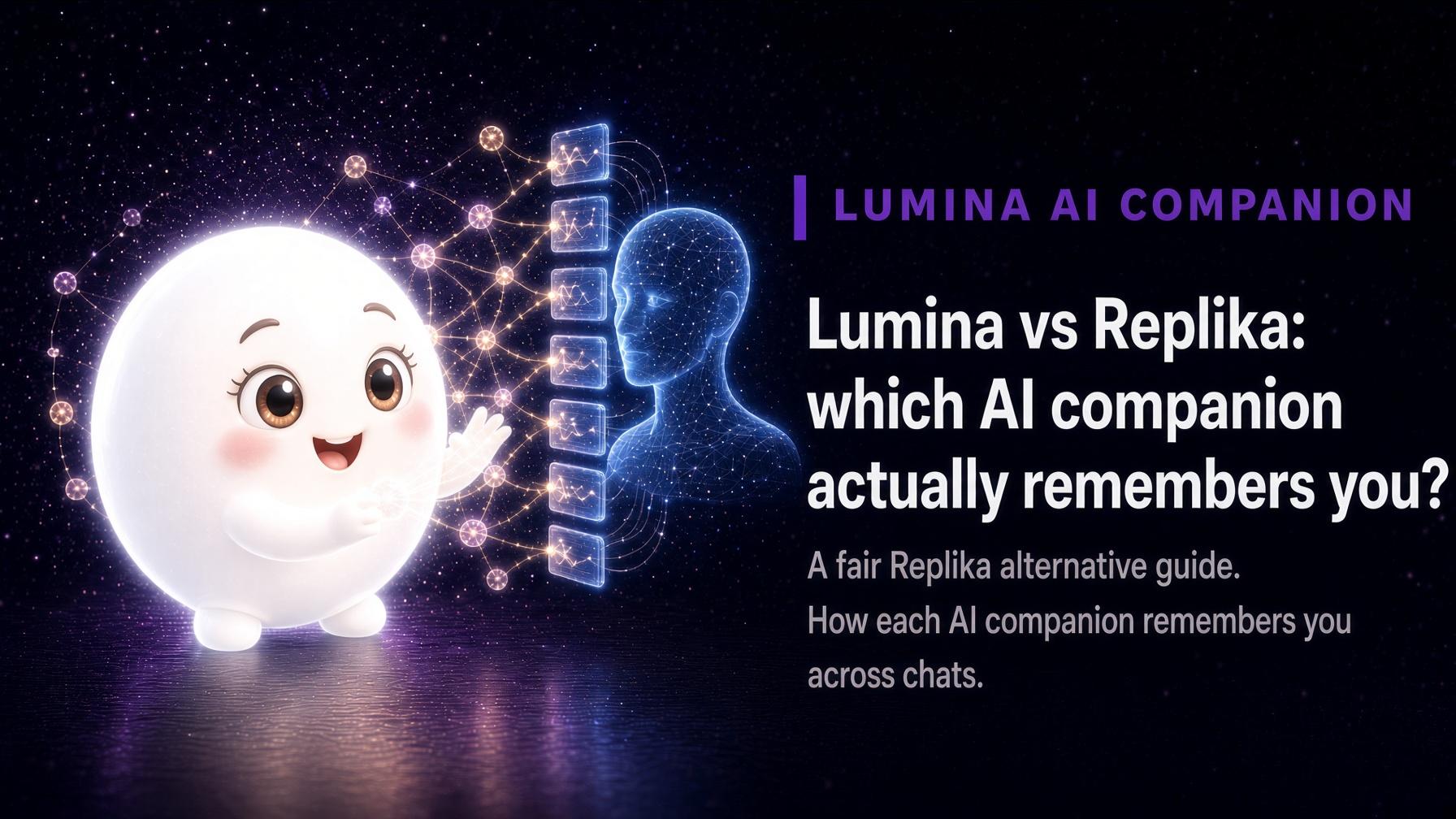
Replika and Lumina both remember you across conversations, but they show that memory differently: a list of saved memories versus a Living Neural Map you can explore.
An AI companion is built for an ongoing relationship, not one-off tasks. Here is a plain definition, how it differs from assistants and chatbots, and what it does day to day.
Choosing an AI companion? Check these five things first: persistent memory, memory you can see, real continuity, privacy transparency, and a genuine companionship feel.
Lumina AI Companion keeps a private, user-scoped memory that persists across conversations, letting you pick up where you left off each time.
Assistants complete tasks, companions build continuity. Learn the real difference between an AI companion and an AI assistant, and why memory is the dividing line.